
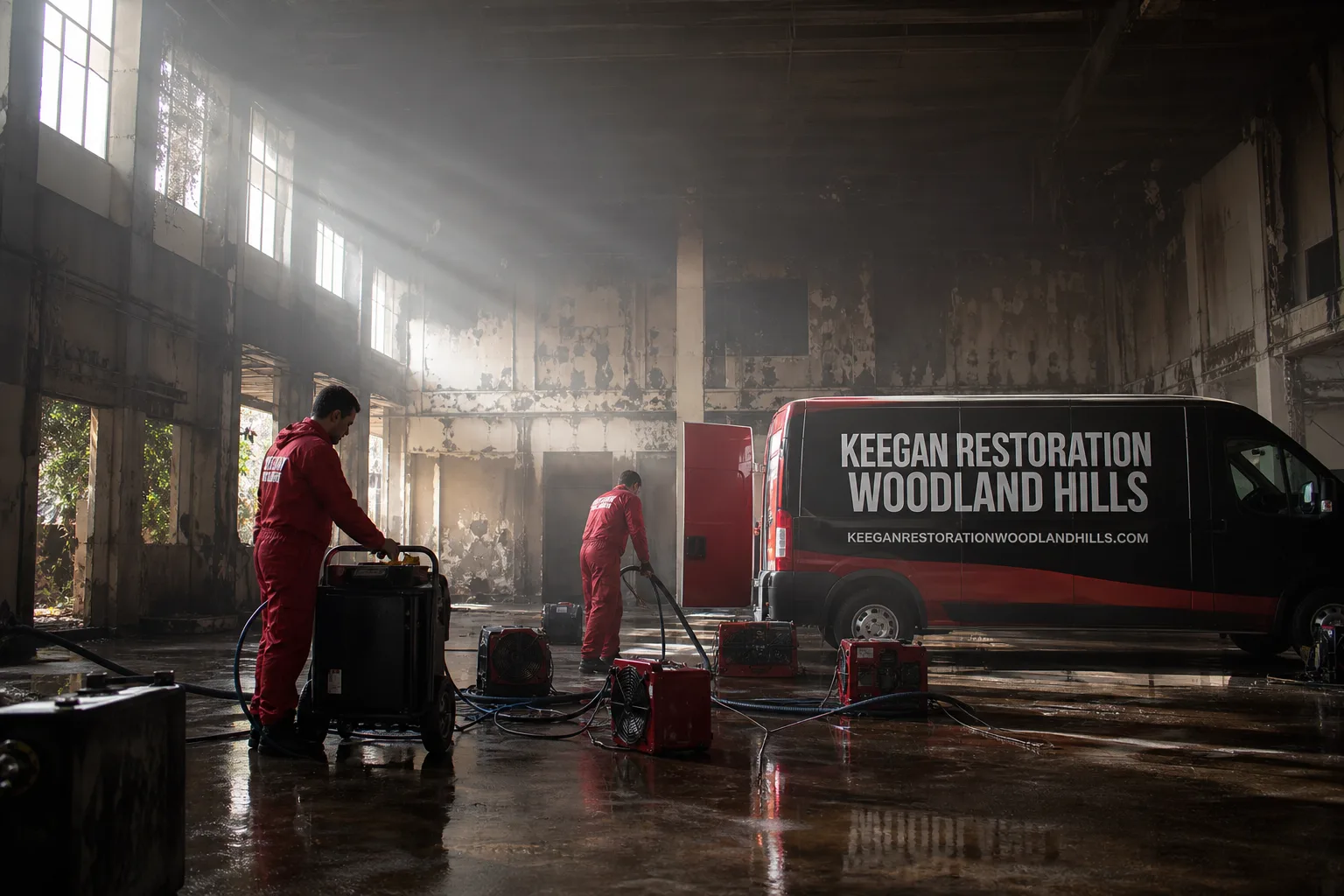
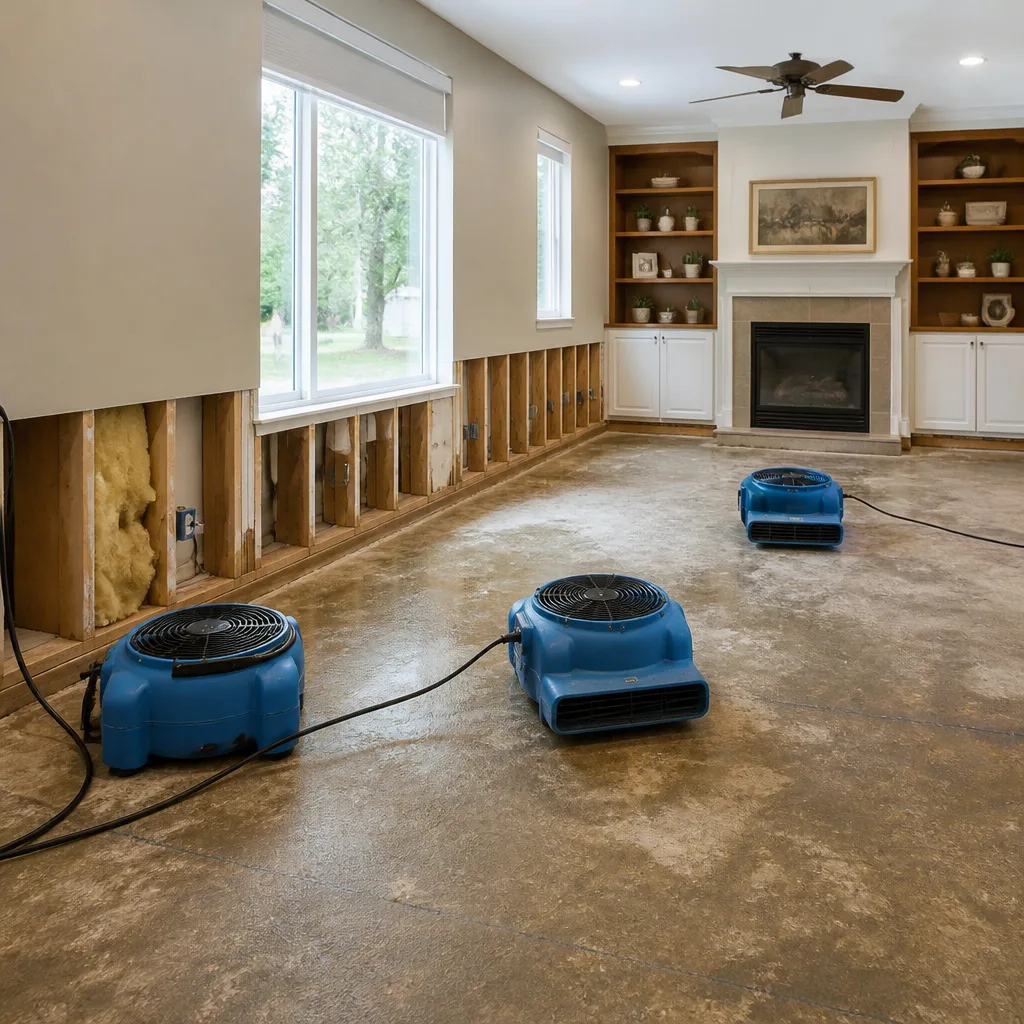
 Water damage drying
 Fire & smoke cleanup
 Mold remediation
 Storm response
 Sewage cleanup
 Reconstruction
Free visual inspection and a written scope of work before any mitigation begins - photos, moisture readings, and drying logs go in your claim file
The scope we write is the scope we bill. Anything new gets shown to you, in writing, before we touch it.
Get your free estimateFast, Reliable Water Damage Restoration Across Bel Air
Water damage restoration in Bel Air, CA typically costs between $2,500 and $8,500 for a standard room, with basement and hillside jobs running higher due to access and structural complexity. Most Bel Air homeowners need a crew on site within 60 to 90 minutes to stop water from spreading through plaster walls and hardwood floors. We know the gates, the winding roads, the HOA protocols. You call, a live person answers, and a background-checked crew rolls up inside the window we give you. Call (559) 258-5719 and we’ll have someone headed your way while you’re still on the line.
Our Water Damage Restoration team works to The Garrison Standard: written price before work starts, professional-grade equipment, and a 365-Day Done Right Promise in writing on every repair. If it’s not right, we come back and make it right at no charge for a full year. No door-moving pricing. No unmarked vans. Just a disciplined crew that documents everything so your insurance claim holds up.
Why Keegan Restoration Woodland Hills Is Bel Air’s Preferred Water Damage Restoration Company
Keegan Water Damage Restoration is part of the Garrison Partners family, and we’ve been running water, fire, and mold jobs to a written standard since 2005. That standard lives on every Bel Air job. Shane Pruitt, who leads our operation, holds technicians accountable to one rule: the written price is the price. It doesn’t move when the crew arrives, and it doesn’t grow when the drying equipment goes in.
Bel Air homeowners don’t have time to chase contractors. The estates out here, whether mid-century modern on Bellagio Road or Spanish Colonial off Stradella Road, sit behind security gates and steep driveways. We dispatch from the brand’s Los Angeles office, so crews reach Bel Air quickly and already know how to work within HOA and gate protocols. Every technician is background-checked, uniformed, and trained to treat a 1930s estate with the same care as a newer build in Lower Bel Air.
You’ll get photo documentation on every phase, from initial extraction through final dry-out. That matters when your adjuster asks for proof of loss. It matters when your HOA’s architectural review board wants to see exactly what was removed and what replaced it. We format every job file to support your insurance claim, and we walk you through it in plain language.
Restoration work we handle
Water Mitigation in Bel Air
Water mitigation in Bel Air is the emergency first move: stop the water, remove what’s soaked, and start drying the structure before mold gets a foothold or flooring starts cupping. In Bel Air’s Mediterranean climate, the wet winter months push water into hillside basements and behind plaster walls, and the summer heat bakes moisture into framing fast if the drying phase isn’t aggressive. A typical water mitigation scope in Bel Air runs $1,800 to $5,200 depending on the affected square footage, the category of water, and whether we’re pulling baseboards, drilling weep holes, or running desiccants through a wine cellar.
The Mitigation Playbook We Run Here
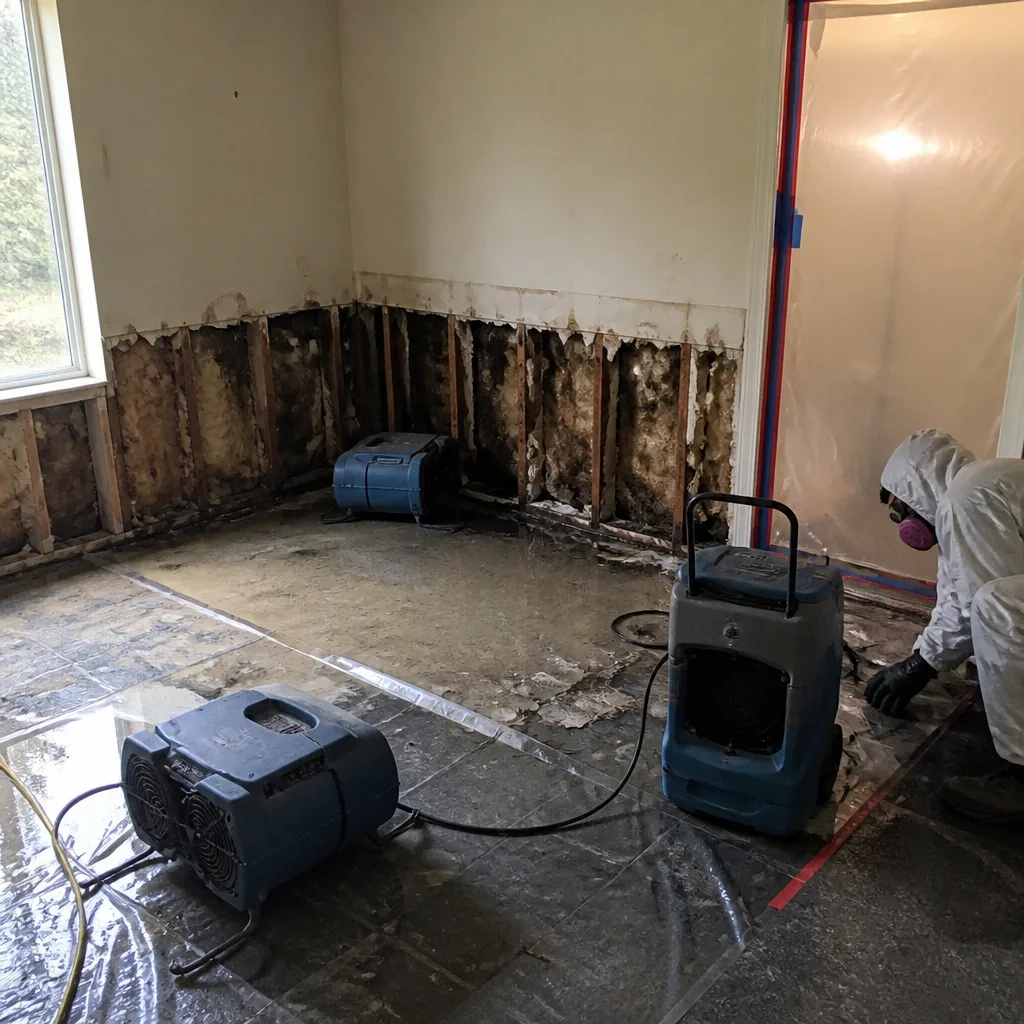
We identify the water class and category first: clean supply line, gray water, or black water. That determines what gets cut, what gets cleaned, and what gets replaced. In Bel Air, category 2 and 3 losses often come from failed hillside drainage or sudden mudslide intrusion into lower levels. We extract with truck-mounted or portable units, set Dri-Eaz and Phoenix air movers and dehumidifiers, and monitor psychrometrics, which is simply measuring moisture in air and materials to confirm the structure is actually drying. We don’t guess with our hands. We measure.
What The Garrison Standard Means on a Mitigation Job
Before any equipment enters your home, you have a written scope of loss and a written price. No exceptions. Our technicians explain every step from extraction through drying in terms you can repeat to your adjuster or HOA manager. The 365-Day Done Right Promise covers the mitigation work for a full year. If moisture comes back or the drying falls short, we come back and make it right at no charge.
Flooded Basement in Bel Air
A flooded basement in Bel Air almost always means a hillside excavation, a wine cellar, or a lower level cut into the slope, and water has found its way in after a heavy rain, a failed sump, or a burst supply line. Bel Air’s hillside basements are uniquely vulnerable because groundwater moves downhill, not away, and hydrostatic pressure pushes through foundation walls and slab edges. Flooded basement restoration in Bel Air typically runs $3,500 to $9,500, with higher figures when we’re removing custom finishes, treating mold, or installing drainage corrections. Speed matters here because earth-sheltered spaces don’t dry on their own.
Why Basements Here Demand Specialized Drying
A wine cellar or finished lower level in Bel Air is a concrete and plaster box buried in the hillside. Once water gets in, relative humidity spikes and the room will not dry without mechanical dehumidification and airflow. We use desiccant drying, which strips moisture from the air even in cool, tight spaces where refrigerant dehumidifiers underperform. Technicians monitor daily moisture readings until every surface hits a dry standard. The goal is structural integrity and no hidden mold behind the drywall.
When a Flooded Basement Becomes a Structural Issue
Water behind a foundation wall isn’t just wet; it’s pressure. We check for efflorescence, cracking, and silt deposits that indicate hillside runoff is actively tracking in. If drainage is the root cause, we document it and coordinate with the homeowner or HOA before any repair. Bel Air lots vary widely, from crest properties with quick runoff to canyon-side parcels that collect water from above. Our job is to dry the space and tell you plainly what caused the flood so you’re not paying for the same repair twice.
Trusted Brands We Service in Bel Air
We run professional-grade equipment from Dri-Eaz, Phoenix, and XPOWER on Bel Air jobs because these are the brands IICRC-standard restorers actually use. Injection-drying systems from Injectidry reach wall cavities and under hardwood without tearing out finished surfaces, which matters when you’re trying to preserve original flooring. The equipment roster isn’t for show; it’s what gets a 1970s Spanish Colonial dried in place rather than gutted. We maintain our own inventory, and crews arrive with what the job needs, not whatever was left in the truck from the last call. For Water Damage Restoration in Bel Air, that means faster setup, quieter operation where HOAs enforce quiet hours, and drying that actually finishes on schedule.
See the difference
 Before
 After
After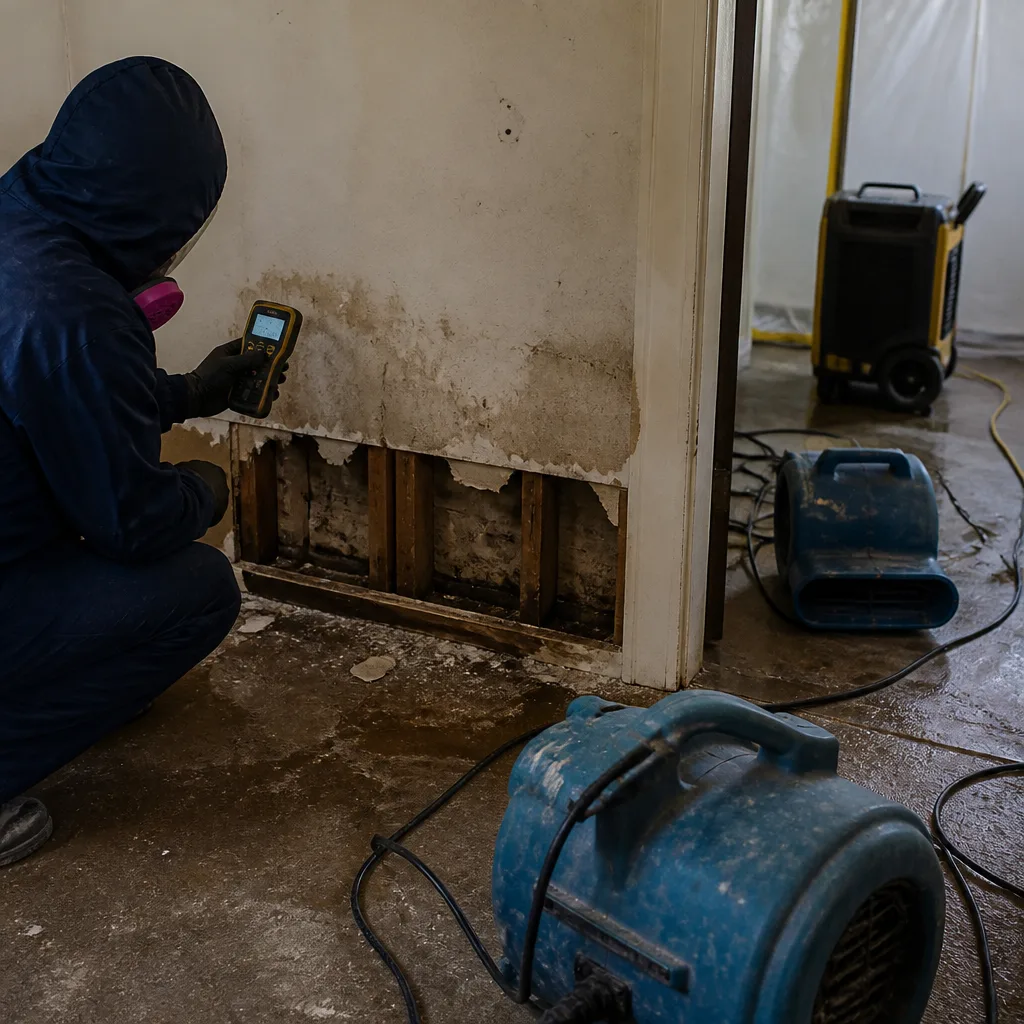 Before
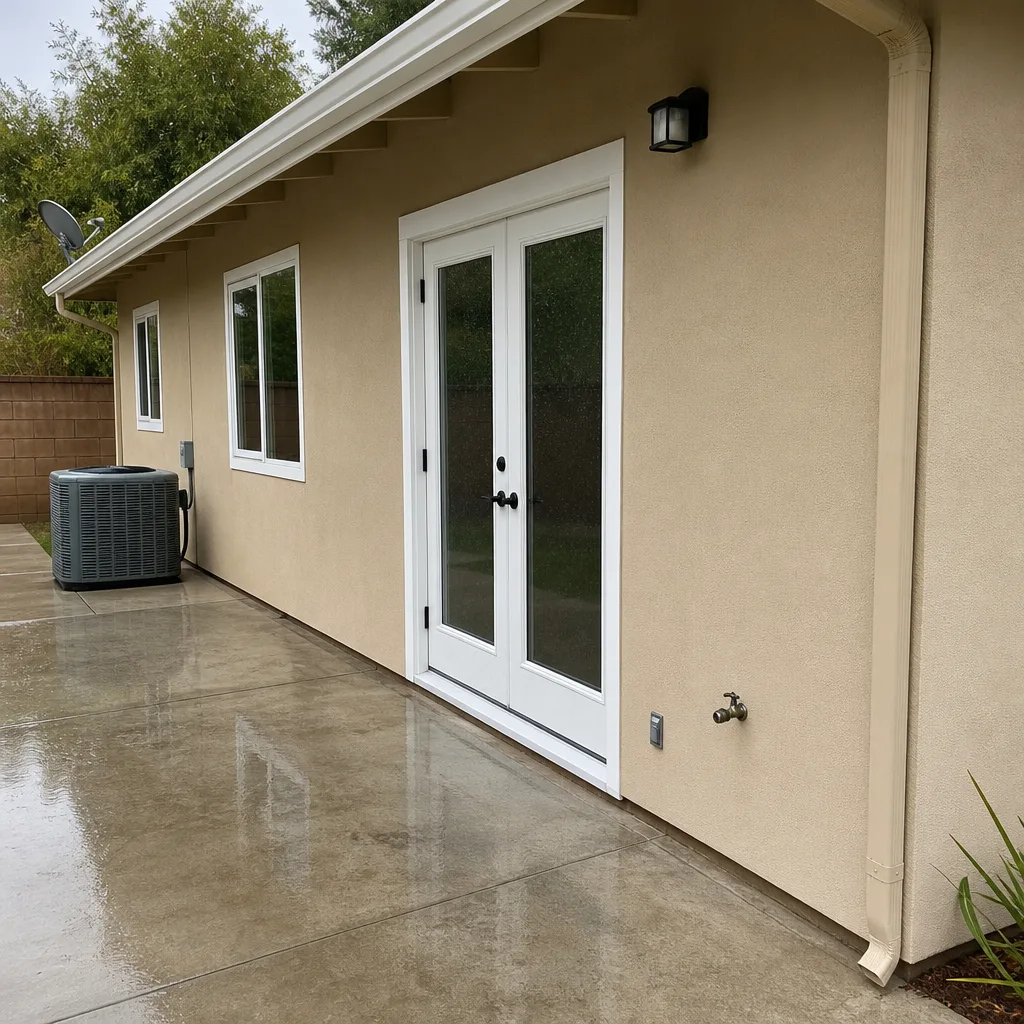 After
After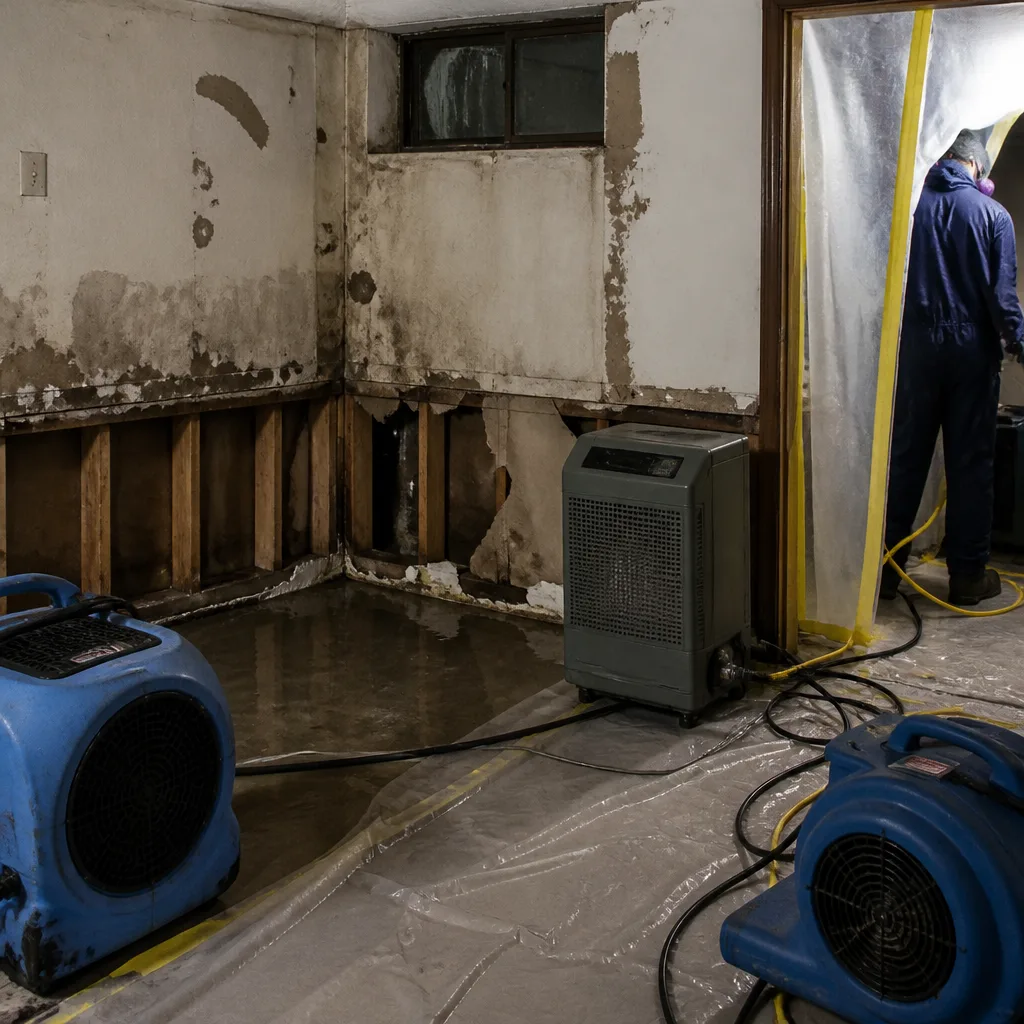 Before
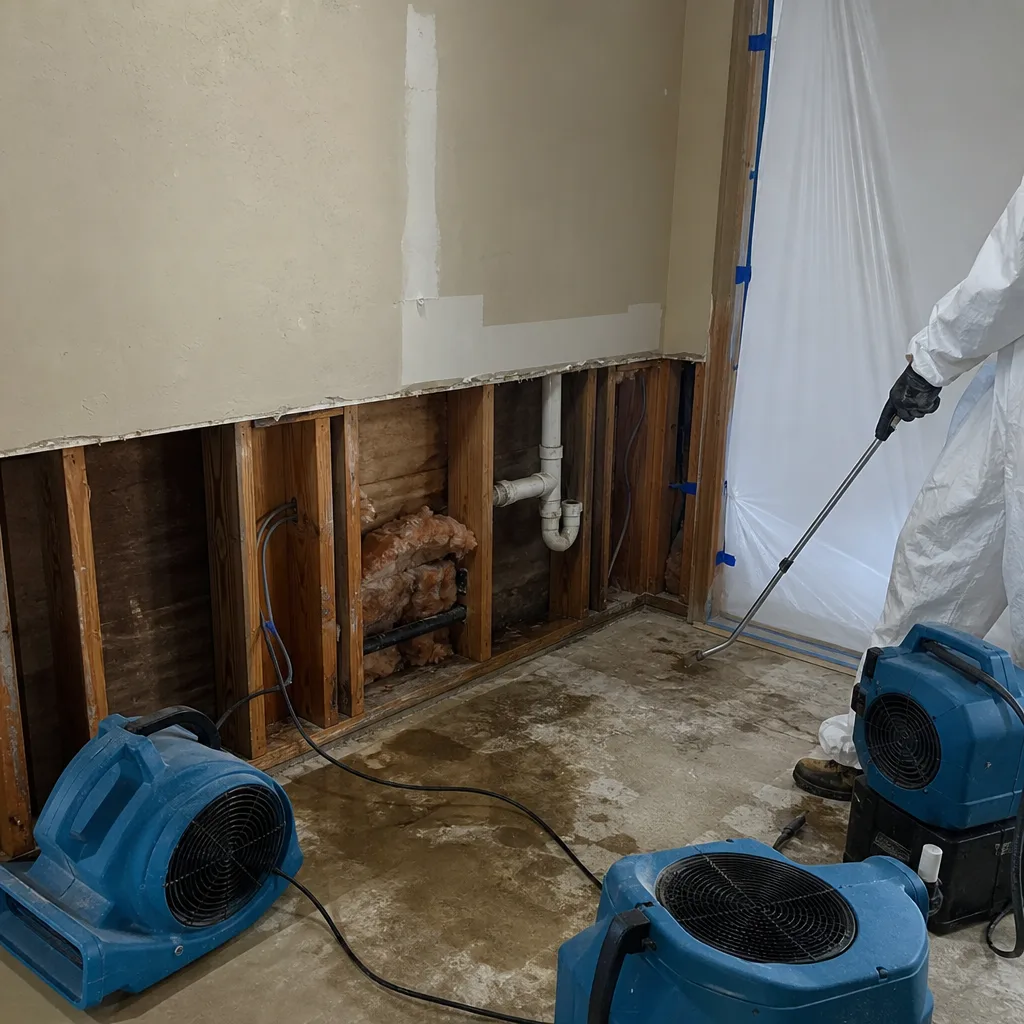 After
AfterCommon Water Damage Restoration Problems We See in Bel Air Homes
- HOA architectural review after water damage: Bel Air boards often require replacement doors, trim, and finishes to match the original in style, material, and color. A generic replacement that violates the community’s standards can mean fines and a re-do at homeowner expense. We document pre-loss condition and coordinate with the ARB before installing replacements.
- Hillside basement and wine cellar intrusion: Earth-sheltered spaces behind Sunset Boulevard and up toward the crest collect groundwater after winter storms. Hidden moisture behind walls or built-in racking becomes a mold problem within days. Drying must reach every cavity, not just the floor.
- Plaster walls behaving like sponges: Pre-1980s Bel Air homes, especially Spanish Colonial and French Chateau styles, have thick plaster over wood lath. Water migrates upward and sideways through the plaster, so the visible stain is usually smaller than the actual wet zone. We map moisture with meters and open only what needs opening.
- Noise restrictions during drying: Many Bel Air HOAs enforce quiet hours, often 7pm to 7am. Loud industrial air movers running all night will draw neighbor complaints and board notices. We stage drying equipment around those windows where possible and use quieter desiccant units in sensitive areas.
Pricing for Water Damage Restoration in Bel Air, CA
We Also Serve Cities Near Bel Air
We work the same hillside terrain in Woodland Hills, where canyon-fed drainage and older split-levels create similar water paths. Sherman Oaks and Encino bring us into both hillside homes and flatland mid-century builds, and Tarzana’s mix of ranch and newer construction keeps our drying plans varied. If you’re outside Bel Air proper but need a crew that already understands the valley’s water patterns, call and ask.
Serving Bel Air, CA - Our Local Coverage Area
We’re based in the Bel Air area and know this community well. Use the map below to see our service coverage - if you’re nearby, we can almost certainly help.
FAQs About Water Damage Restoration in Bel Air
Will your water damage restoration work pass my Bel Air HOA’s architectural review board?
Yes, our process is built around passing architectural review because we document pre-loss condition, carry the ARB’s requirements with us on site, and coordinate before replacing any visible finish. That means we photograph and measure the original door profile, trim, plaster texture, and hardware before we remove it. Then we match those specs to the board’s standards. The written scope you get includes those compliance notes. We’d rather go back and forth with the board one extra time before installation than leave you holding a violation letter after the drying is done. Call (559) 258-5719 if you’re already hearing from your board; we’ll tell you what’s fixable.
How do you handle water damage in a hillside basement or wine cellar in Bel Air?
We treat it as a contained, earth-sheltered drying problem, not a standard room. We check the foundation wall for groundwater intrusion, install desiccant and refrigerant dehumidification sized for that space, and place air movers to push moisture out of built-in racking and wall cavities. We monitor daily moisture readings, not just surface dampness, because hillside basements hold water in materials for weeks after the visible flood is gone. Our crews have dried wine cellars off Bel Air Road and lower levels along Stone Canyon, where racking complicates access. It’s slower work and the pricing reflects that, but it’s always written before we start.
Do you work within Bel Air’s noise restrictions and security gate protocols?
We do. Our technicians know that many Bel Air enclaves enforce quiet hours and gate access rules, and we plan equipment staging around both. Where possible, we use quieter desiccant units overnight and schedule louder extraction and demo work inside daytime windows. For gated streets, we coordinate entry with the homeowner and any required security desk before the first truck arrives. That’s part of running a disciplined job in this area, and it keeps neighbor complaints and board citations off your plate.
My water damage is from a clean supply line – do I still need full restoration, or just drying?
Clean supply-line water doesn’t need decontamination the way category 3 water does, but it still wets drywall, floors, and framing, and those materials need to be dried to a measurable standard or you’ll get mold and warping. In a Bel Air home with plaster walls and hardwood floors, water spreads quickly behind surfaces, so the dry-out plan matters more than the water’s cleanliness. We’ll scope it accurately: some supply-line losses only need extraction and drying; others need selective removal. The written scope will show exactly what we recommend and why. You don’t have to guess.
Can you match the original plaster and hand-carved wood in my 1930s Bel Air estate after water damage?
Yes, and this is where Bel Air work is different from a typical track-home repair. We’ve matched hand-troweled plaster texture and aged wood grain on estates along Stradella Road and Bellagio Road. On one 1970s Spanish Colonial, a supply line flooded the lower level and we coordinated with the HOA’s ARB to match the original hand-carved baseboards and plaster finish before a single piece was installed. It passed without a citation. We document the original profiles, source or reproduce them, and keep the architectural board in the loop. Matching work costs more and takes longer, and we’ll say so up front.
If water is moving through your home right now, call (559) 258-5719. A live person answers, we tell you what to do in the next ten minutes, and a crew heads your way. The estimate is free, the price is written before work starts, and the guarantee holds for a full year.
Written by Shane Pruitt, Owner at Keegan Restoration Woodland Hills, serving Bel Air with water damage restoration, fire damage restoration, and mold remediation since 2005.