
Last updated October 16, 2026
 Water damage drying
 Fire & smoke cleanup
 Mold remediation
 Storm response
 Sewage cleanup
 Reconstruction
Free visual inspection and a written scope of work before any mitigation begins - photos, moisture readings, and drying logs go in your claim file
The scope we write is the scope we bill. Anything new gets shown to you, in writing, before we touch it.
Get your free estimateThe Complete Guide to Damage Restoration in Woodland Hills
The Woolsey Fire didn’t just burn structures. It pushed smoke and soot through canyons and across the 101, settling inside homes that sat miles from any fire line. Most of those homeowners never filed a claim, because nobody told them smoke infiltration on a hillside lot in Woodland Hills counted as restorable damage. This guide maps every damage type to the local conditions that actually cause it here: canyon winds, hillside drainage failures, aging Spanish-tile roofs, and the urban heat island effect along Ventura Boulevard. By the end, you’ll know how to read a scope of work, what your insurance adjuster actually needs from you, and which questions to ask before anyone touches your walls.
Quick Answer
Damage restoration in Woodland Hills CA means addressing three categories of property damage: water, fire and smoke, and mold. Each one has a specific escalation window: water needs extraction within 24-48 hours before mold colonizes; smoke and soot need professional cleaning before acidic residue permanently etches surfaces; and mold needs containment before spores spread through HVAC systems. The defining quality of a legitimate restoration company in Woodland Hills is a written scope of work and price delivered before any equipment enters your home, plus a written guarantee on the repair.
Restoration work we handle
Table of Contents
- Why Woodland Hills Has Damage Patterns Other LA Neighborhoods Don’t
- Water Damage: What Happens in the First 72 Hours
- Fire and Smoke Damage: The Damage You Can’t Always See
- Mold: Why Woodland Hills Hillside Lots Are Higher Risk
- What ‘Full-Service Restoration’ Actually Means on Paper
- Insurance Documentation: The Single Biggest Factor in Claim Approval
- The Garrison Standard: What a Written Price and Guarantee Look Like in Practice
- How to Read a Scope of Work Document
Why Woodland Hills Has Damage Patterns Other LA Neighborhoods Don’t
Woodland Hills sits at the southwestern edge of the San Fernando Valley, where the Santa Monica Mountains meet a flat grid that stretches toward the 101. That geography creates three conditions most restoration guides never address. First, the canyon winds. When the Santa Anas blow, they move smoke, soot, and fine particulate matter through the hillside streets south of Ventura Boulevard at a rate flat-grid neighborhoods simply don’t experience. Homes on Dolorosa, Dumetz, and Wells Drive that sit a mile from any fire line still collect smoke residue inside wall cavities and attic insulation. Second, the hillside lots. Many Woodland Hills homes are built into slopes, which means retaining walls, French drains, and foundation drainage systems carry a heavier load than they would on flat ground. When a hillside drainage system fails during winter rains, water doesn’t just pool; it moves downhill and into the structure. Third, the urban heat island effect along Ventura Boulevard. The corridor’s dense commercial development plus the Valley’s summer heat creates temperature swings that accelerate condensation in crawl spaces and attics, especially in older homes with original 1950s and 1960s framing.
Those three patterns mean Woodland Hills homeowners deal with damage that presents as one problem but originates as another. A water stain on a ceiling below a hillside lot is often a drainage failure, not a roof leak. A persistent musty smell in a home that sits below the Boulevard is often a condensation problem in an unventilated crawl space. Knowing the source matters because treating the symptom without addressing the source is how the same repair gets needed twice. We’ve walked into homes in the Vista de Oro neighborhood where previous contractors dried the visible water and missed the failed retaining wall drain twenty feet uphill.
Water Damage: What Happens in the First 72 Hours
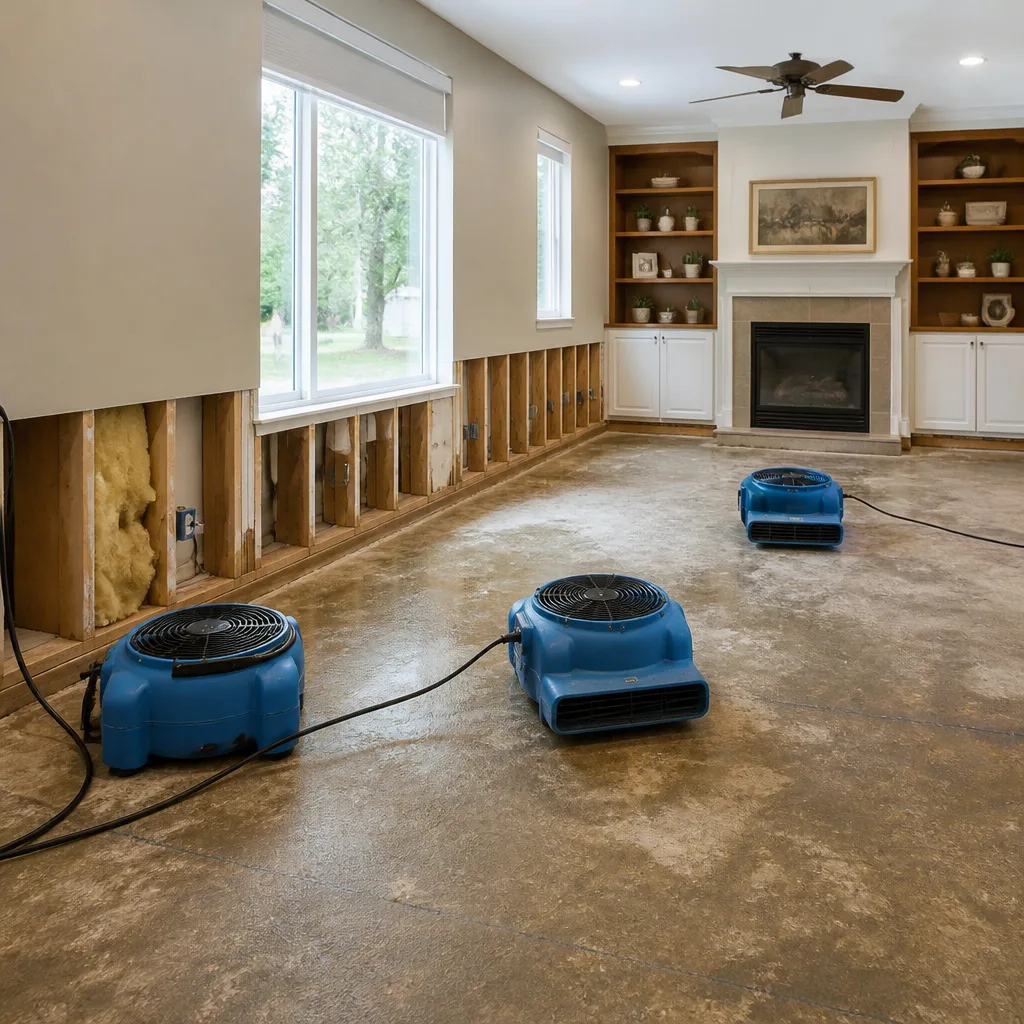
Water damage in Woodland Hills has three escalation stages, and each one has a window. Stage one is the first 24 hours: water saturates drywall, wicks upward through baseboards, and begins delaminating laminate flooring. At this stage, professional extraction with truck-mounted or portable equipment, followed by air movers and desiccant dehumidifiers, can often save the structure. Stage two is 24 to 48 hours: wood framing begins to swell, drywall loses structural integrity, and mold spores that were dormant in the wall cavity now have the moisture they need to colonize. Stage three is beyond 72 hours: mold is visibly growing, insulation is saturated, and secondary damage to finished surfaces means containment and controlled demolition are now part of the scope. The cost difference between a clean extraction job and a full mold remediation that involves removing drywall is significant. We’ve seen water heater failures off Victory Boulevard that were contained in four hours and cost less than $2,000 to dry, and toilet supply line failures left over a weekend that turned into full bathroom rebuilds costing ten times that.
Here’s what extraction actually means when it’s done to a professional standard. The tech uses a moisture meter to map the affected area, not just their eyes. They place extraction equipment to pull standing water. They position air movers to create airflow across every wet surface, and they run desiccant dehumidifiers sized to the cubic footage of the room. The study of how air, temperature, and moisture interact inside a building is called psychrometrics, and a tech who understands it knows where to place equipment and how long it needs to run. A tech who doesn’t understand it is guessing. If you’re dealing with active water intrusion in Woodland Hills, read our full guide on Water Damage Restoration in Woodland Hills for the step-by-step process, equipment details, and what to expect from a written scope.
One note specific to Woodland Hills: many homes south of the Boulevard are built on clay-heavy soil that expands when wet. That soil movement places pressure on foundation walls and floor slabs. If you have water damage in a hillside home, the moisture in the framing is only half the story; the soil outside is also moving, and that can create cracks that allow water back in after the interior is dried.
Fire and Smoke Damage: The Damage You Can’t Always See
Most people picture fire damage as charred framing and collapsed roofs. In Woodland Hills, especially after the Woolsey Fire, the far more common experience is smoke and soot damage inside a home that never had a flame touch it. Smoke is a gas carrying solid particulates. Those particulates are tiny, often smaller than one micron, which means they move through the tiniest gaps in window frames, attic vents, and electrical outlets. They settle on surfaces as soot, and here’s the part most people miss: soot is acidic. Left on painted walls, it etches the finish. Left on metal fixtures, it pits and corrodes. Left in HVAC ductwork, it recirculates through the house every time the system turns on.
Smoke damage restoration starts with understanding what burned. Wood smoke leaves a different residue than synthetic materials, which create a greasy, smeary soot that requires different cleaning chemistry. A fire in a kitchen that burned cooking oil leaves a different residue than a fire in a garage that burned plastics and insulation. The tech needs to know the fuel source to choose the right cleaning method. The process generally involves HEPA vacuuming of loose soot, dry sponge cleaning on sensitive surfaces, wet cleaning on painted walls, deodorization using thermal fogging or ozone treatment, and sealing of surfaces where odor has penetrated, typically with a shellac-based primer before repainting. If you’re dealing with fire or smoke damage, read our guide on Fire Damage Restoration in Woodland Hills for the full breakdown of each step and what to expect during claim documentation.
Woodland Hills homeowners should know one thing: insurance policies almost always cover smoke damage as part of a fire damage claim, even if there was no structural fire. The adjuster will not automatically open a smoke damage claim for you. You need to document the residue, request inspection, and have a restoration company on site to assess the extent. That’s where the claim starts getting complicated, and where documentation matters more than most people realize.
Mold: Why Woodland Hills Hillside Lots Are Higher Risk
Mold is a moisture problem, not a cleanliness problem. If you have mold in your Woodland Hills home, there is a source of water or humidity feeding it. The mold didn’t show up because the house was dirty; it showed up because water found a way in, or because condensation is forming in a place that never dries. That distinction matters because of what it means for remediation. You can scrub mold off the surface of a wall. If the moisture source is still active behind that wall, the mold grows back in weeks. The remediation only works if the source is corrected first. Homeowners who’ve been through a bad contractor experience usually describe exactly this pattern: someone cleaned the visible mold, painted over it, collected a check, and the mold returned by the next rainy season.
Hillside lots in Woodland Hills carry a specific mold risk that flat-grid neighborhoods in the Valley don’t. When a retaining wall drain clogs, when a hillside swale overflows during winter rain, or when a French drain is old and crushed, water doesn’t pool on the surface where you can see it. It moves laterally into the hillside side of the foundation, into crawl spaces, and into the framing of lower-level rooms. By the time you smell the musty odor or see discoloration on a baseboard, the moisture has been active for weeks or months. That’s why mold remediation in Woodland Hills often requires a drainage correction alongside the indoor work. Read our comprehensive guide on Mold Remediation in Woodland Hills for the full containment, removal, and source-correction process.
Professional mold remediation is a controlled process, not a scrubbing. The affected area is contained with plastic sheeting and negative air pressure so that disturbing the mold doesn’t release spores into the rest of the house. The tech wears a respirator and full PPE. The mold is physically removed, not just sprayed. Porous materials like drywall and carpet that are saturated with mold get cut out and disposed of, not painted over. The remaining surfaces are sanded where appropriate, treated with an antimicrobial, and dried. Air scrubbers run throughout the job, and clearance testing may be performed after. That’s the difference between remediation and painting over a problem.
What ‘Full-Service Restoration’ Actually Means on Paper
‘Full-service restoration’ is a phrase that gets used loosely. Some contractors mean they’ll refer you to a plumber, a drywaller, and a painter and you coordinate the rest. Others mean they’ll handle everything from extraction through finish work and hand you a key at the end. The difference matters because it changes who you call when the repair fails. If the water extraction company and the drywall company are different crews, each one points at the other when the repair goes wrong. If one company runs the entire job with a single written scope, there’s one entity responsible for the result.
On paper, full-service restoration means a single scope of work that covers every phase: emergency response, mitigation, demolition as needed, structural drying, reconstruction, and finish work. The scope should list each phase, the materials and equipment involved, the estimated duration, and the price. The price should be delivered in writing before the first phase starts, and it should not move unless the scope itself changes and both parties agree to the change in writing. That’s what a written price actually means. If the contractor can’t put the price in writing before they start, walk away. You are not obligated to sign anything on the spot during an emergency, and any company that pressures you to sign an open-ended work authorization with no scope and no number is telling you what the rest of the job will be like.
Here’s what a complete scope of work for water damage restoration should include. This is the document you review before any work begins:
- Initial assessment and moisture mapping: the tech identifies affected areas, takes moisture readings, and marks the perimeter of the damaged zone.
- Extraction: standing water is removed. The scope specifies the equipment type and capacity.
- Drying plan: air movers and dehumidifiers are placed according to a psychrometric calculation. The scope lists how many units, where they go, and the expected drying timetable.
- Demolition as needed: saturated drywall, baseboards, and flooring that cannot be dried are cut out and removed. The scope specifies exactly what gets removed.
- Structural drying verification: the tech returns with a moisture meter to verify that framing and subfloor have reached acceptable moisture levels before reconstruction begins.
- Reconstruction: drywall, texture, paint, flooring, and trim are reinstalled to match existing finishes as closely as possible.
- Final walkthrough: you walk the job with the tech, identify any remaining items, and receive the written guarantee.
That’s what the document looks like when it’s real. When a contractor hands you a one-page work order that says ‘dry out affected area’ with no equipment list, no moisture readings, and no demolition spec, you’re being handed an open ticket.
Insurance Documentation: The Single Biggest Factor in Claim Approval
Most homeowners think the insurance process works like this: damage happens, you call a restoration company, they do the work, you send the bill to your insurer, and the insurer pays. In reality, the claim approval process is decided by documentation submitted during the restoration, not after it. The adjuster who reviews your claim is looking for one thing above all else: proof that the damage existed, that the scope of work matches the damage, and that the work was necessary. If that proof doesn’t exist when the file is reviewed, the claim fights uphill.
The documentation that matters includes photos, moisture readings, and a written scope that shows precisely what was affected and what was done to correct it. An adjuster reviewing a claim where the contractor handed over a single paragraph description of work done has no evidence to approve anything. An adjuster reviewing a file with photographic evidence of the affected area before work began, moisture meter readings showing the extent of saturation, a detailed scope of work with equipment specifications, and photos of the completed repair has what they need to move the claim forward. That’s the difference between a claim that gets approved in weeks and one that drags on for months or gets denied entirely.
This is also where contractor behavior matters. A restoration company that knows how insurance claims work will document as they go, take photos at every phase, and format the documentation to support the claim. A contractor that doesn’t will hand you a bill and tell you good luck with your adjuster. If you’re in the middle of a claim and need to understand how your restoration shop should be handling the paperwork, start with our Keegan Restoration Woodland Hills home page, which explains our documentation process and how it’s structured to support insurance claims.
The other big point: don’t wait for your adjuster to tell you what to do before you call a restoration company. Your policy requires you to mitigate further damage. That means you have a duty to stop the water, dry the structure, and prevent mold. If you sit on a water damage situation for a week waiting for an adjuster to call back, and mold colonizes in the meantime, the insurer may reasonably say the mold growth was preventable and limit coverage. The correct sequence is: call your restoration company first, start mitigation, then work with your adjuster on coverage. The mitigation work is almost always covered, and you’ve fulfilled your policy duty. Waiting is the expensive option.
The Garrison Standard: What a Written Price and Guarantee Look Like in Practice
The Garrison Standard is the name for the set of commitments that governs every job at Water Damage Restoration in Woodland Hills through Keegan Restoration Woodland Hills. It exists because the standard contractor behavior in this trade, the behavior most Woodland Hills homeowners have personally experienced, is a moving target. The crew shows up late, the price moves after the walls are open, the sub they send isn’t who you hired, and when the repair fails six months later, nobody calls you back.
The Garrison Standard replaces that with four commitments, each one specific enough to hold someone to. The price is put in writing before any work begins, on every job, no exceptions. The technicians are background-checked and arrive in uniform, dispatched from a location that runs to this standard. The equipment is professional-grade, drawn from brands like Dri-Eaz, Phoenix, and XPOWER, and operated in compliance with IICRC standards. And every repair is backed by the 365-Day Done Right Promise, a written guarantee that says if the repair fails within one year, Keegan returns and makes it right at no charge, with a free second visit. Those aren’t vague promises. They’re written into the scope of work you sign before anything starts.
Let’s be plain about what the guarantee covers and what it doesn’t. The 365-Day Done Right Promise covers the workmanship and materials from the repair. If the drywall seam cracks, if the paint fails, if the repaired pipe leaks again at the same joint, that’s covered. It does not cover new damage from a new event, and it does not cover ordinary wear and tear. Any contractor who won’t tell you what their guarantee excludes is selling you a feeling, not a warranty. A real guarantee reads like a contract, because it is one.
Here’s the practical checklist for evaluating any restoration company in Woodland Hills before you let them inside:
- Can they put the price in writing before work starts, including the scope of what’s included and what’s not? If they can’t, don’t hire them.
- Do they run background checks and send uniformed techs, or does whoever shows up look like a day laborer dispatched from a truck?
- Does their equipment roster include brands like Dri-Eaz, Phoenix, B-Air, or XPOWER, or is it whatever was on sale at the hardware store?
- Do they document the job at every phase with photos and moisture readings, formatted for insurance submission?
- Do they hand you a written guarantee that specifies the term, what’s covered, and what happens if it fails?
- When you call at 9pm on a Saturday night with a burst pipe, does a live person answer, or do you get a voicemail tree?
How to Read a Scope of Work Document
Most homeowners read a scope of work like a novel: they skim the headings, look at the bottom-line number, and sign. Then they’re surprised when the job that gets delivered doesn’t match the job they pictured. A scope of work is a technical document, and reading it well means understanding the trade language. Here’s how to read one like an adjuster would.
Start with the water damage categories. A scope should state the IICRC water damage category: Category 1 is clean water from a supply line or pipe; Category 2 is gray water from appliances or sump failures that contains some contaminants; Category 3 is black water from sewage or outside flooding that requires full containment and antimicrobial treatment. If your scope says Category 3, but the price looks like a Category 1 job, someone’s cutting corners on PPE, containment, or disposal. Next, look at the liner breakdown. A legitimate scope lists each phase separately: extraction, drying, demolition, reconstruction, and finish work, each with its own line item and price. If the total is just a lump sum with no line items, you don’t know what you’re paying for. Look for specifics on the drying plan: how many air movers, what size dehumidifier, how many days of drying are included, and how the end of drying is determined. A scope that says ‘dry until dry’ is not a scope. Look for the demolition boundary: exactly which walls, which ceiling sections, and which flooring get removed and replaced. If the scope says ‘as needed,’ you need a price that covers the full extent of ‘as needed’ or a change order procedure defined in writing. Finally, look for the guarantee language. A real scope references the written guarantee, its term, and what happens if the work fails.
The job number, the equipment list, the moisture readings, the category, the line-item pricing, and the guarantee. That’s the anatomy of a scope of work written by a professional. If any of those elements is missing, you’re not looking at a scope; you’re looking at a hope and a handshake.
Common Mistakes to Avoid
- Waiting to see if it dries on its own. Wet drywall in a Woodland Hills home does not dry on its own. The humidity, especially in crawl spaces and interior wall cavities, keeps moisture trapped long enough for mold to colonize. By the time you can smell it, the scope has grown.
- Hiring on price alone. The cheapest bid on a water damage job in Woodland Hills is often a contractor who plans to cut drying equipment, skip containment, or demo less than what’s needed. You’ll pay for the second repair within a year.
- Not documenting the damage before cleanup starts. Your insurance claim depends on photographic and moisture evidence. Once the drywall is cut out and the flooring removed, that evidence is gone. Take photos yourself on day one, and hire a contractor who documents as they go.
- Assuming mold remediation and water restoration are the same thing. They’re related, but not identical. Drying wet materials is restoration; removing established mold colonies safely is remediation, which requires containment, negative air pressure, and different safety protocols. One can turn into the other if water isn’t handled fast enough.
- Signing an open-ended work authorization during the emergency. You’re standing in two inches of water, someone hands you a clipboard, and you sign. That authorization often has no scope, no price, and no limit. A legitimate contractor can give you a written price before starting, even in an emergency.
- Ignoring the drainage because the indoor work looks done. On hillside lots in Woodland Hills, the indoor repair is only complete when the outdoor drainage that caused it is corrected. Painting over a water stain while the hillside drain is still clogged is burning money.
- Painting over a smoke smell. Sealing smoke-damaged surfaces with regular paint traps odor behind the coating. The right sequence is cleaning, deodorization, and a shellac-based sealer, then paint. Skipping steps just means you’ll repaint again in six months.
See the difference
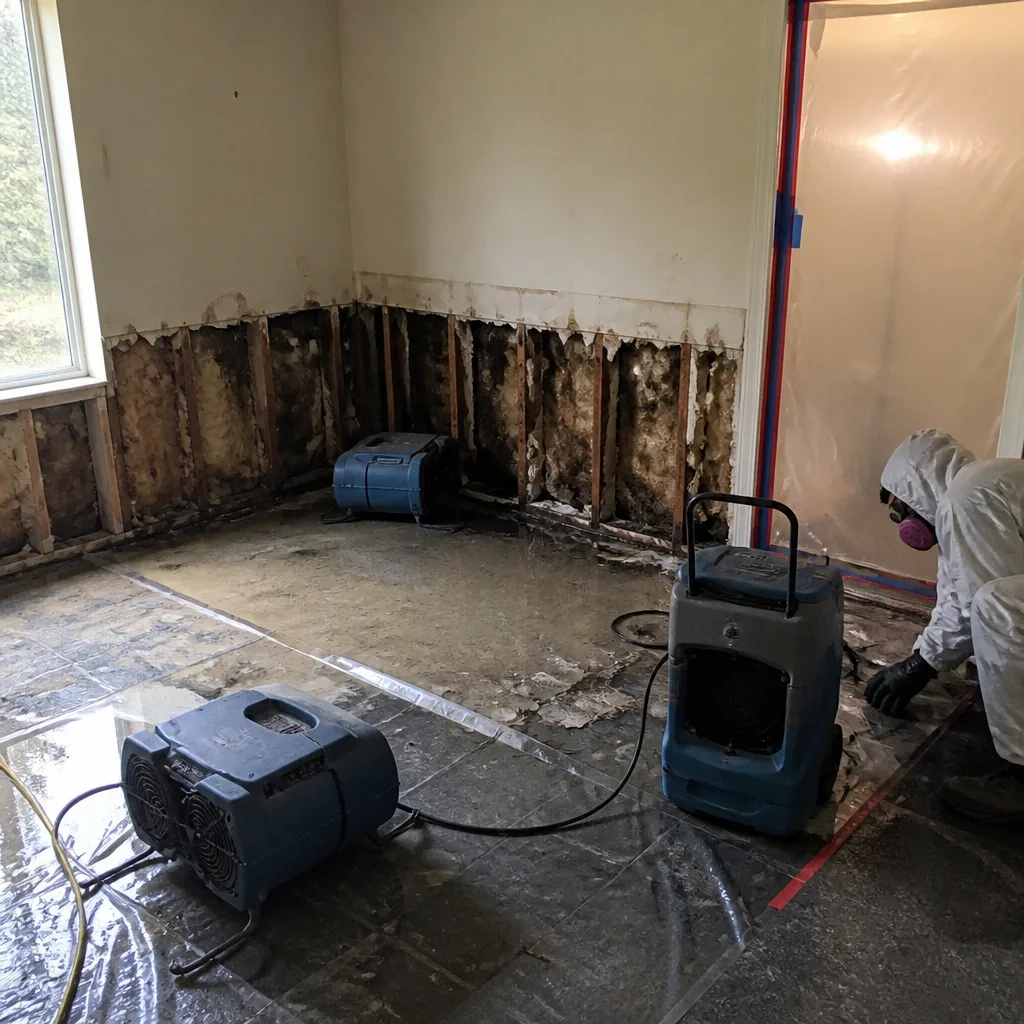 Before
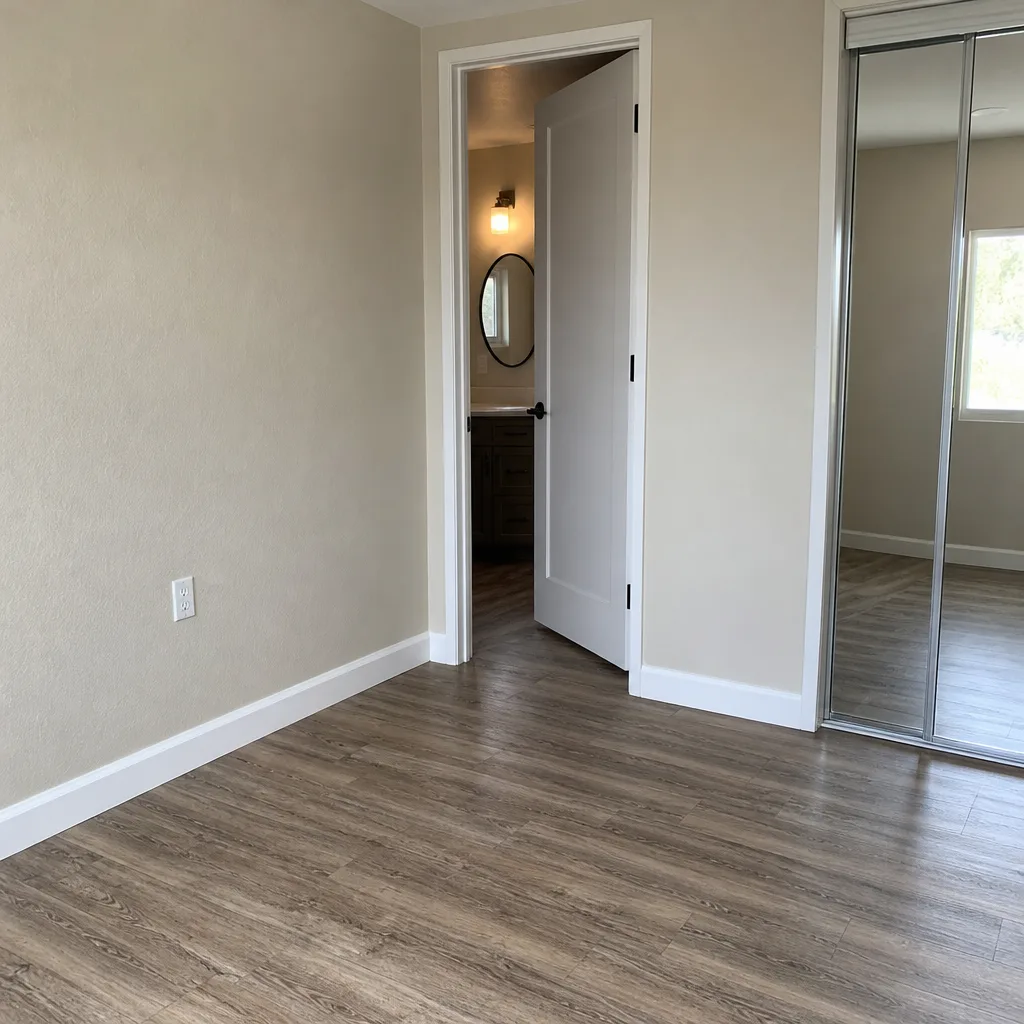 After
After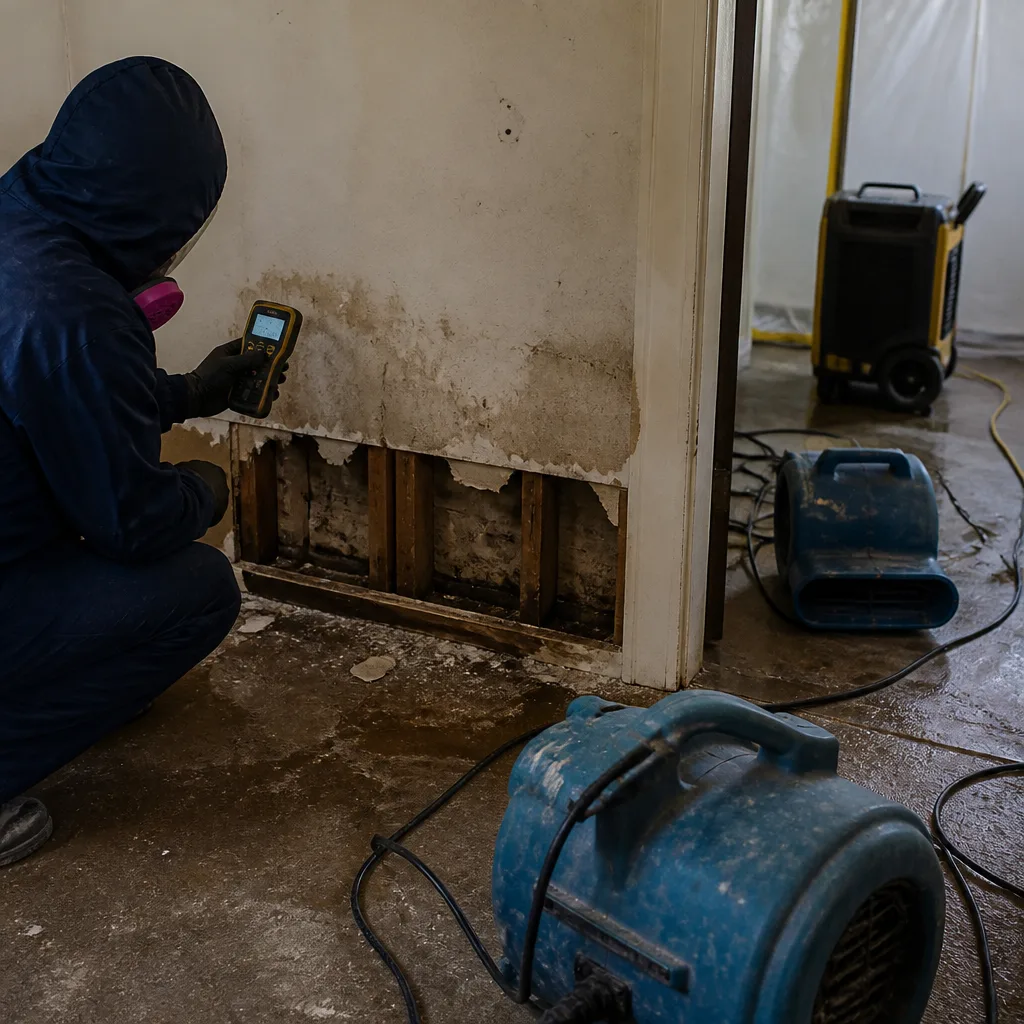 Before
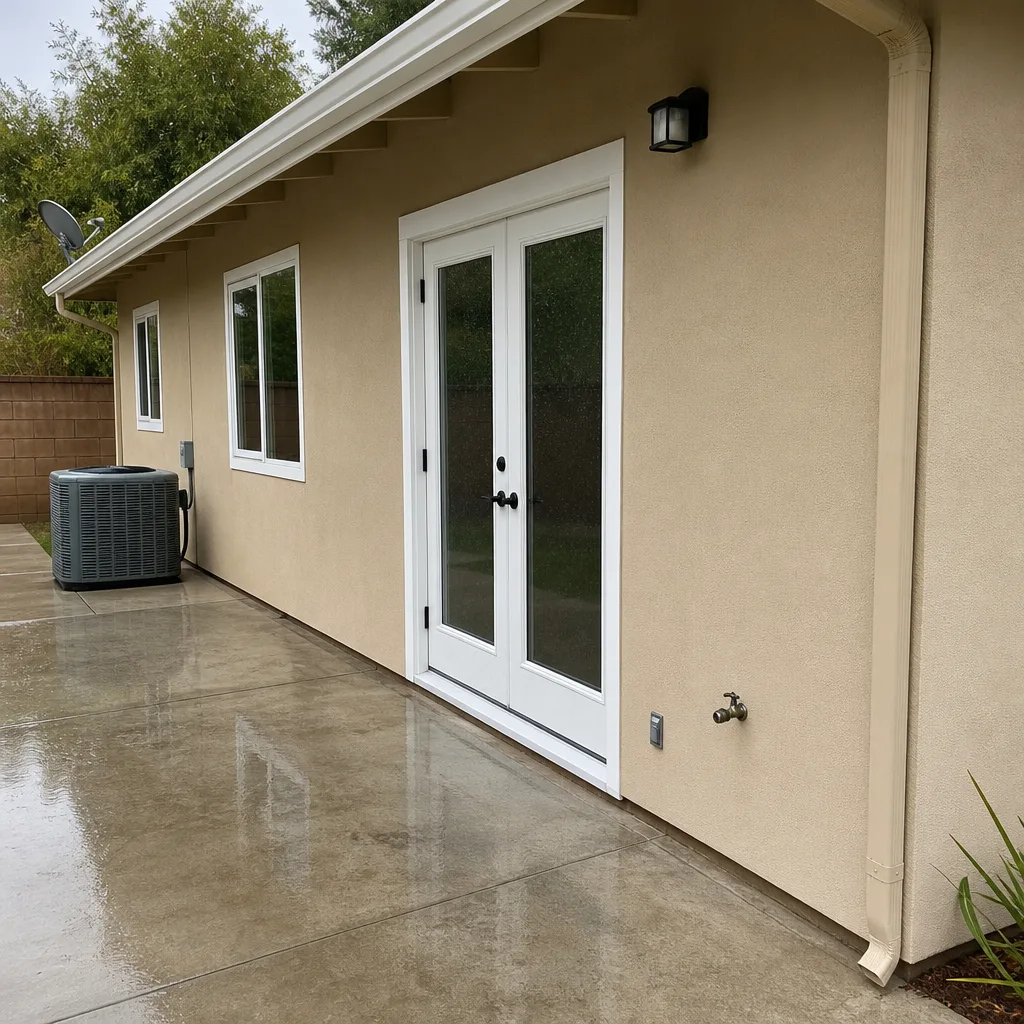 After
After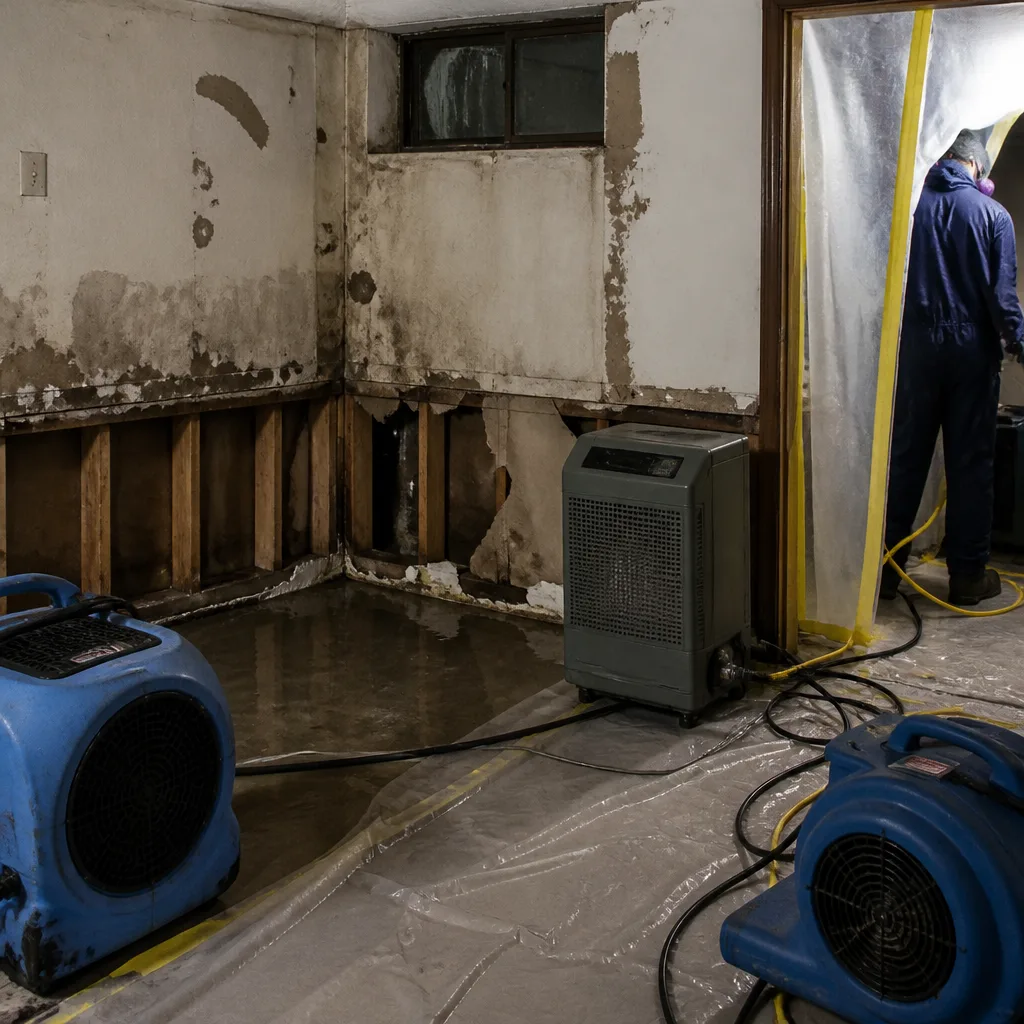 Before
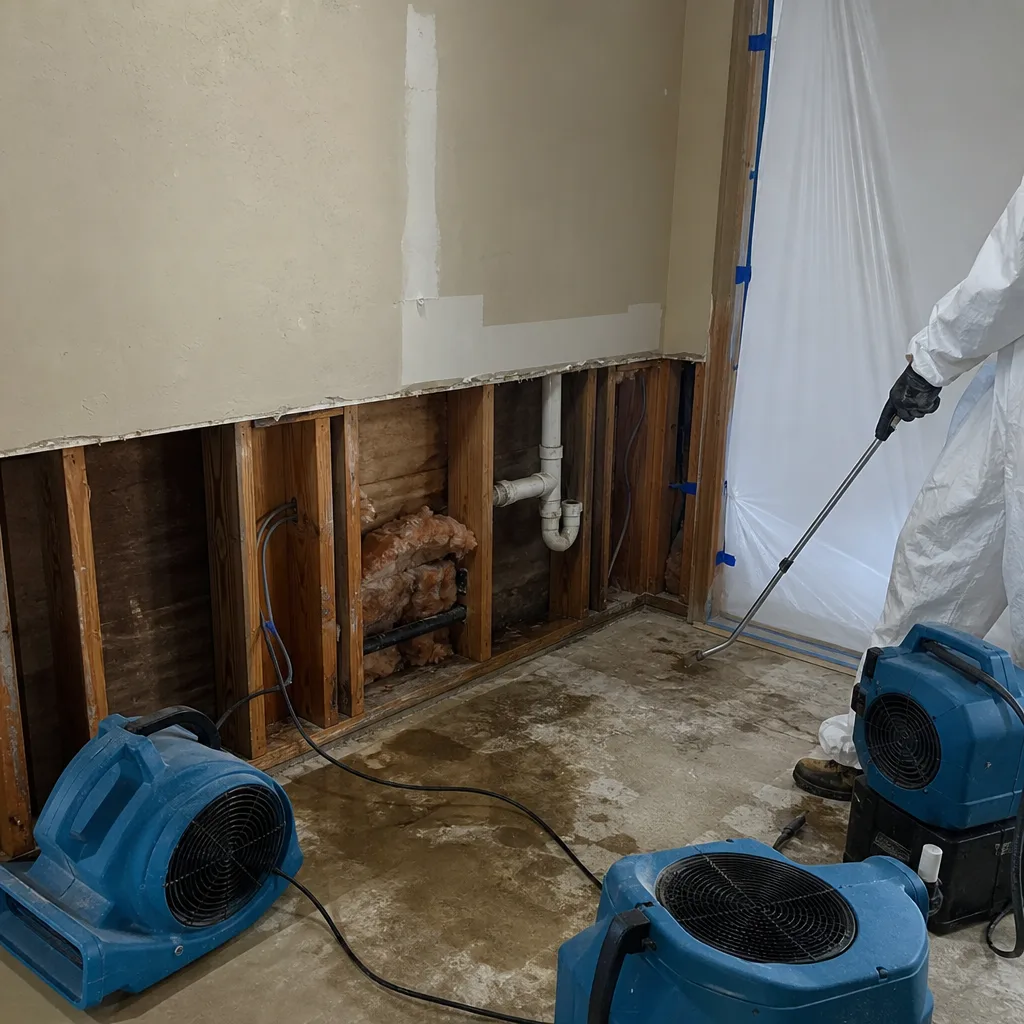 After
AfterWhen to Call a Professional
Call a professional the moment you see standing water that covers more than a few square feet, water coming through a ceiling or light fixture, a sewage backup, visible mold growth larger than a dinner plate, a persistent musty smell you can’t locate, or smoke residue visible on walls after a nearby fire. If water has been present for more than 24 hours, the window for a simple dry-out has already narrowed. If you can see water staining on a ceiling below a bathroom or a kitchen, there is a leak inside a wall or floor cavity that has been active longer than the stain suggests. None of these situations resolves itself. Keegan Restoration Woodland Hills offers free estimates in Woodland Hills: call (559) 258-5719 and a live person answers, 24 hours a day, every day of the year.
Frequently Asked Questions
Water damage restoration in Woodland Hills typically costs between $1,500 and $6,000 depending on the extent of the damage, the category of water involved, and whether demolition is required. A small clean-water leak contained to one room runs on the lower end; a sewage backup requiring containment and full bathroom demolition runs higher. Call (559) 258-5719 for an exact written quote: estimates are free and the price is in writing before any work starts.
Most homeowners insurance policies cover sudden and accidental water damage like a burst pipe or a supply line failure, and fire and smoke damage including smoke infiltration from a nearby wildfire. Mold remediation is typically covered only when it results from a covered water event, not from long-term moisture or neglect. The key is documentation during the restoration, which is the single biggest factor in approval speed.
You should be able to reach a live person immediately by phone, day or night, and have a crew on site within a few hours for active water damage. If you call and get a voicemail or an answering service that says someone will call back, you’re talking to a company that can’t manage the emergency you called about. The Keegan line is answered by a live person 24/7 at (559) 258-5719.
If you can see mold growth covering an area larger than about a dinner plate, smell a persistent musty odor, or have mold inside wall cavities or HVAC ducts, you need containment and remediation, not surface cleaning. Scrubbing visible mold without addressing the moisture source and without containing the area just releases spores into the rest of the house. A professional assessment will tell you the difference, and in Woodland Hills the assessment almost always includes checking the hillside drainage that feeds lower-level moisture problems.
A professional restoration company should document the job in a format designed for insurance submission: photos at every phase, moisture readings, a written scope, and a final report that matches the work to the damage. You still communicate with your adjuster, but you shouldn’t be the one assembling evidence. If your contractor hands you a final bill with no documentation and tells you to deal with the adjuster yourself, you’ve hired the wrong contractor.
Yes, Keegan Restoration Woodland Hills serves the full Woodland Hills area including neighborhoods south of Ventura Boulevard, the hillside lots around Dolorosa and Dumetz, and the flats near Warner Center and Topanga. A live person answers at (559) 258-5719, 24 hours a day, every day.
Fire damage restoration in Woodland Hills varies widely depending on whether you’re dealing with structural fire damage, widespread soot and smoke residue, or smoke odor only. A whole-house smoke cleaning and deodorization job typically runs between $3,000 and $10,000; structural fire damage involving reconstruction is a different scope entirely and requires a full written estimate. Read the Fire Damage Restoration in Woodland Hills guide for an itemized breakdown, then call for an exact quote.
The Bottom Line
Woodland Hills damage restoration is local. The canyon winds push smoke where flat-grid LA neighborhoods never see it. The hillside drainage failures create water and mold problems that floor-level streets never experience. The heat island effect along Ventura Boulevard changes how moisture behaves in an attic or crawl space. A restoration company that understands those conditions, puts the price in writing before work starts, runs to a written standard, and backs the repair with a written one-year guarantee is the difference between a repair that holds and a repair you pay for twice. Keegan Restoration Woodland Hills is part of the Garrison Partners family, serving Woodland Hills since 2005. Every job runs to The Garrison Standard, and every repair carries the 365-Day Done Right Promise in writing. Call (559) 258-5719 for a free estimate, and a live person will answer.
Written by Shane Pruitt, Owner at Keegan Restoration Woodland Hills, serving Woodland Hills since 2005.